By Dairon Canel · Founder, Proven · Updated October 2026
Guide
Minimum viable product examples: five famous ones, and a small one you can open today
A minimum viable product is the smallest thing you can put in front of real people to learn whether your idea holds up. It can be a video, a landing page, a person doing the work by hand, or one page with one button. “Viable” is the part people skip. It has to be real enough that someone can use it, pay for it, or ignore it, because that reaction is the data.
Most lists of MVP examples tell the same five stories about companies that are worth billions now. I'll tell those too, with a link to where each story comes from. Then I'll show you a small one I built for my sister's kitchen, which is live right now and still takes orders. I think the small one is more useful, because it's the size of MVP you're actually going to build.
What counts as an MVP (and what doesn't)
Three terms get mixed up constantly.
| What it is | Who sees it | What it answers | |
|---|---|---|---|
| Proof of concept | A test that the hard technical part works | Usually just you or your team | Can this be built? |
| Prototype | A model of how the product will look and feel | A few testers, often in a guided session | Do people understand it? |
| Minimum viable product | The smallest version real users can use on their own | Real users, with no one guiding them | Will people use it, or pay for it? |
The line that matters is the last column. A prototype tells you whether people get it. An MVP tells you whether they care enough to come back, order, or pay when nobody is watching.
Types of MVP
| Type | What you put out | Example below |
|---|---|---|
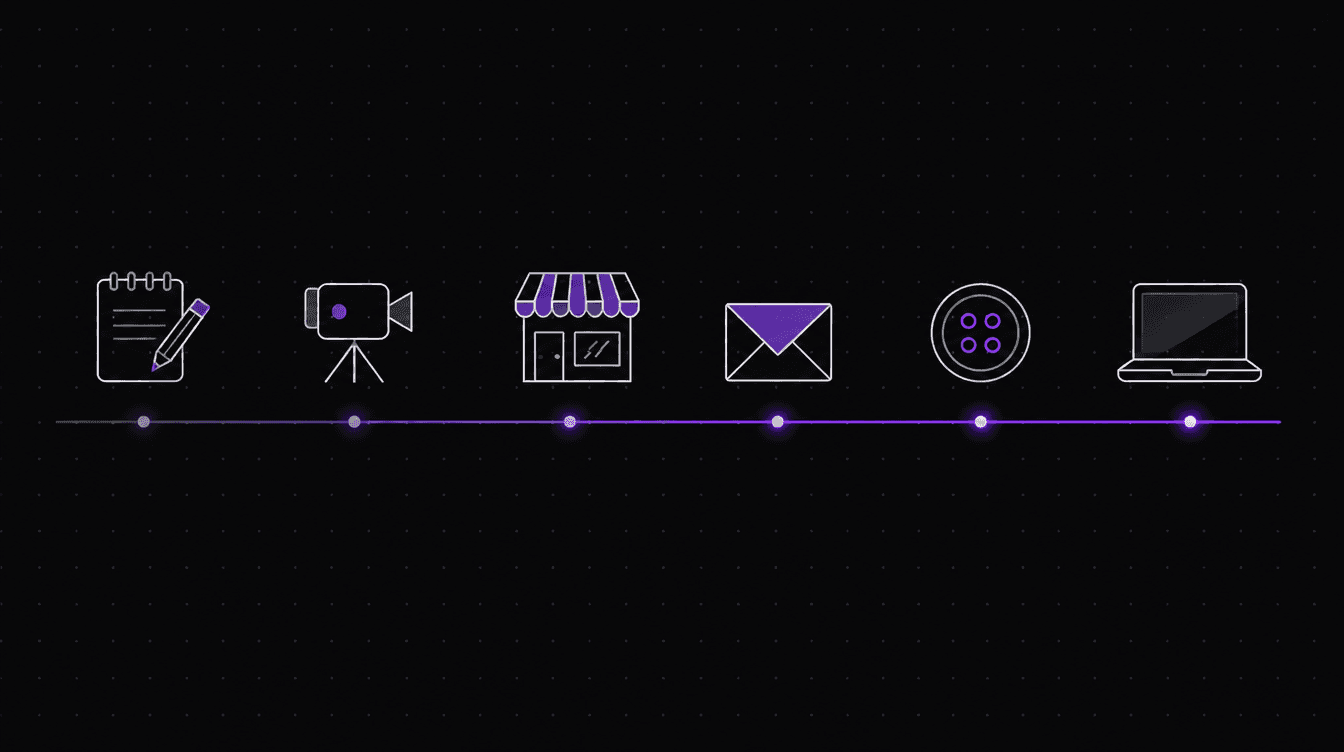
| Video | A demo of a product that barely works yet | Dropbox |
| Wizard of Oz | A storefront that looks automated, with you doing the work behind it | Zappos |
| Concierge | The outcome, delivered by hand, openly | Food on the Table |
| Landing page | A page that describes the product and asks for a commitment, like a fake door test | Buffer |
| Single feature | One working feature, nothing else | Sazón de Mi Cuba |
| Manual marketplace | The two sides matched by hand, at tiny scale | Airbnb |
The cheaper the type, the softer the answer. A landing page measures interest. A concierge MVP measures whether people will pay and shows you what the work really involves. If you only have a weekend, start at the cheap end. If you already know people want it, skip ahead.
Famous minimum viable product examples
Dropbox: a video of a product that barely existed
Drew Houston's problem was that file syncing is hard to build and hard to explain. So before the product was ready, he made a demo video showing how it would work. A year after the first video got Dropbox into Y Combinator, the team posted another one on Digg during the private beta, full of in-jokes for that audience. Houston told TechCrunch that the waiting list got 75,000 signups within 24 hours, when they had expected 15,000 at most.
What it proved: people wanted the outcome badly enough to sign up for something they couldn't use yet. What it didn't: whether they'd pay. That came later.
Zappos: photos of shoes from a real store
In 1999 Nick Swinmurn wanted to know if people would buy shoes online without trying them on. He didn't buy inventory. He walked into a shoe store in Sunnyvale, California and, in his words to Fortune, offered: “I'll take some pictures, put your shoes online, and if people buy them, I'll buy them from you at full price.”
What it proved: strangers would pay for shoes they had only seen in a photo. What it cost: a camera, a simple website, and a margin of zero on every sale.
Airbnb: three air mattresses during a sold-out conference
In October 2007, Brian Chesky and Joe Gebbia couldn't cover their San Francisco rent. A big design conference was in town and hotel rooms were scarce, so they bought three air mattresses and set up a simple website. Three guests came, and each paid $80.
What it proved: strangers would pay to sleep in another stranger's home, at least when the alternative was nothing. What it didn't: that this would work outside a sold-out week. That took years.
Food on the Table: one customer, served by the CEO
Food on the Table built weekly meal plans around what was on sale at your local grocery store. Before writing the software, the team found early customers and did the whole job by hand: meeting them, picking recipes against that week's sales, and sending the plan and shopping list by email. Manuel Rosso's talk on the company calls the approach “learn first, code last.” It's the standard concierge MVP example in Eric Ries's The Lean Startup.
What it proved: what customers would actually pay for, and which parts of the job were worth automating first.
Buffer: two pages and a pricing step
Joel Gascoigne wanted to know if anyone would use a tool that schedules tweets. He put up a landing page describing it, with a button that led to a second page saying it wasn't ready yet, plus an email field. Then he added a page in between that showed pricing, so people had to click a plan before leaving an email. Only then did he build. The first version took evenings and weekends over seven weeks, and he had his first paying customer within four days of launching it.
What it proved: interest, and roughly which price people would pick, before a line of product code.
A small MVP you can open right now: Sazón de Mi Cuba
My sister cooks Cuban home food in Lakeland, Florida: ropa vieja, picadillo, fried chicken, each plate with congrí, yuca and salad. Her orders came in by WhatsApp, and every order was a conversation.
The first version I built for her was a single page: her menu, with photos and prices, and one button. The customer taps the dishes they want, taps the button, and WhatsApp opens with the order already written out. She still confirms every order in WhatsApp, the same place she always did. I built it through my studio, daican.dev, and it's live at sazondemicuba.com.
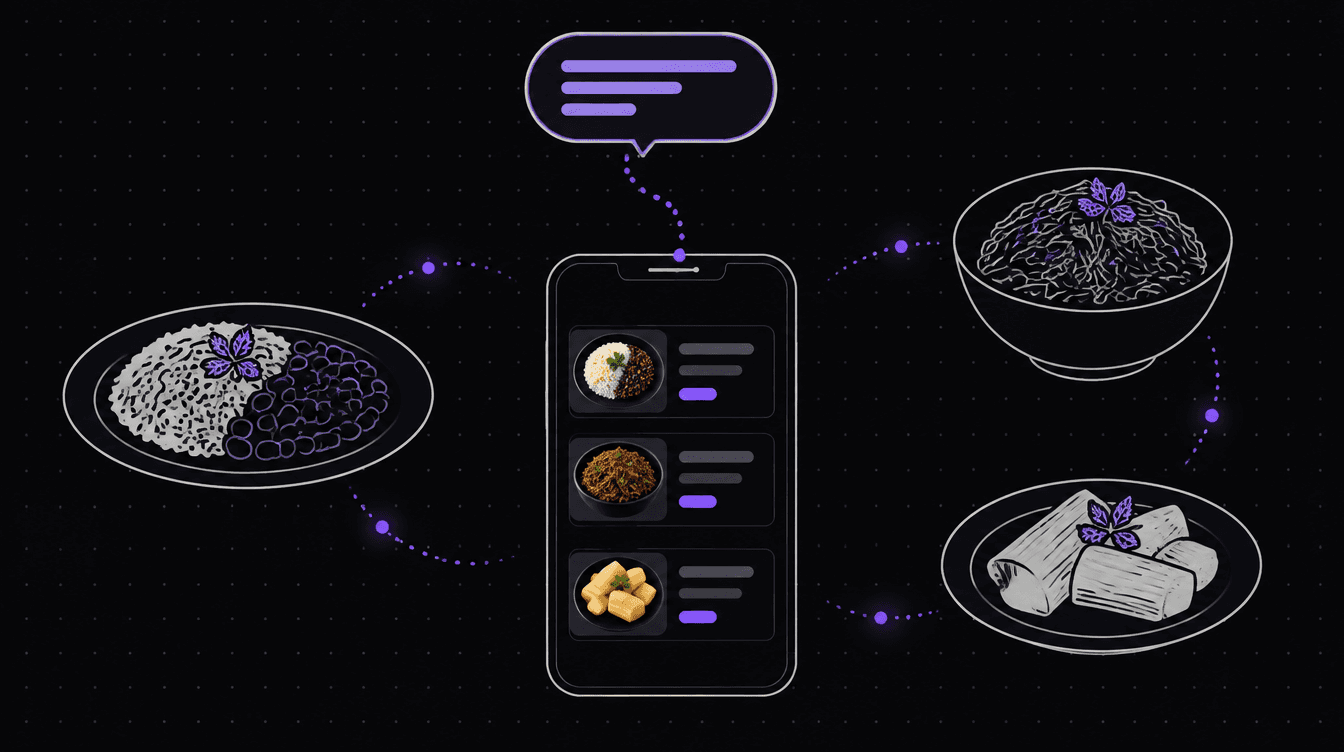
What I left out matters as much as what I put in. There were no online payments, no customer accounts, no order database, and no delivery tracking. WhatsApp stayed the record of every order, because that's where she already worked. From the first line of code to the site going live took about a week.
What it proved: customers would order from a menu page instead of asking questions in a chat, and she could keep up with orders arriving already written out.
What came next: everything after that first page came from her using it. She asked for labeled order windows for lunch and dinner, a notice for customers, delivery prices by real driving distance, a section for party trays with two days' notice, and promotions. As I write this, the “Super Oferta de Octubre” (buy three main plates, get a ham and cheese spaghetti free) is on the page. None of those were in the first version, and I'm glad they weren't, because I would have guessed most of them wrong.
Website MVPs: what your first site actually needs
A lot of MVPs are a website, because a website is the cheapest place to put an offer in front of strangers. “MVP website examples” usually means one of three things.
A landing page that asks for a commitment. An email, a pre-order, a “book a call” button. Buffer's two pages are the model. If you want to measure demand before building anything, run it as a fake door test.
A one-page product. One page that does one useful thing, like Sazón's menu. This is the right call when the thing you're testing is whether people will use it, beyond whether they're curious.
A real small-business website. If the idea is a local service, your MVP is often just the business with a site in front of it. I wrote up what a first small business website needs to have, and the pages most people add too early.
Two questions come up every time. The first is cost. A site builder, a freelancer and a studio land in very different places, and I broke the real numbers down in what a small business website costs. The second is time: a one-page MVP can go live in days, while a full site with content and photos takes longer. Here's a week-by-week website timeline.
If you'd rather not build it yourself, that's the work I do at daican.dev.
What an MVP can't tell you
An MVP tells you whether people will use the thing you built. It doesn't tell you whether the problem underneath is big enough to be a business. Sazón works because one kitchen with real customers needed it. That's a different question from whether a thousand kitchens would pay for it.
Dropbox's waiting list and Airbnb's first weekend were signals, and each company still had to find out whether the pain was common, whether people were already paying for workarounds, and who else was solving it. That part you can check before you build anything: see how often people complain about the problem in public, and use a structured process to validate a startup idea. Proven runs those checks for you and shows every source it used.
Frequently asked questions
What is an MVP, with an example?
A minimum viable product is the smallest version of a product that real people can use on their own, so you can learn whether the idea holds up. Zappos is the classic example: the founder photographed shoes at a local store, posted them online, and bought each pair at full price when someone ordered, which proved people would buy shoes online before he held any inventory.
What should an MVP look like?
As small as possible while still being real. It should do one job end to end for one kind of customer. A single page with a menu and one order button is enough if that's the job. Leave out accounts, payments and dashboards unless the test is specifically about them.
How do I build an MVP for my idea?
Write down the one thing you need to learn, like "will people order from a page instead of messaging me". Pick the cheapest MVP type that answers it: a landing page, a video, doing it by hand, or one working feature. Put it in front of real people who don't know you, and decide in advance what result would make you stop.
How long should it take to build an MVP?
Days to a few weeks, not months. Buffer's first version took seven weeks of evenings and weekends. A one-page MVP can go live within a week. If your plan takes longer than a couple of months, you're probably building more than the minimum.
What's the difference between an MVP and a prototype?
A prototype shows how a product will look and work, usually to testers in a guided session. An MVP is used by real customers on their own, so it can tell you whether they'll come back, order, or pay.
Written by Dairon Canel with AI assistance for research and structure.