By Dairon Canel · Founder, Proven · Updated October 2026
Guide
How much does it cost to start a cleaning business?
About $180 to $195 if you clean homes or Airbnb turnovers on your own. That covers a basic set of supplies and the first month of liability insurance. Practice cleans for friends and family only need the supplies. Before you clean for people you don't know, add the insurance, a bond and a local license if your city asks for one. The LLC and the rest can wait until clients are paying.
The estimator below adds it up for your situation, line by line, with the source for every number. If you're still deciding whether to start at all, the full guide on how to start a cleaning business covers prices, licenses and the first month.
The cleaning business starter kit has the budget sheet, the supplies checklist and the plan for your first clients.
Price your start
Pick what fits you. Every line shows where the number comes from.
- Before you clean for strangers, add the bond (about $120 to $125 a year).
- Later, once clients are paying: the LLC.
- Workers' comp comes once you hire. Insureon's median is $1,362 a year.
The kit turns this into a checklist, plus the messages for your first clients.
Why every guide gives you a different number
Search this question and the first page gives you everything from a few hundred dollars to $60,000, because each guide is pricing a different business.
- Housecall ProAny cleaning business, depending on niche and whether you hire from day one$500 to $5,000+, and "under $1,000" for residential
- XeroHome or commercial clients$1,000 to $5,000
- AspireCleaning startups in general$2,000 to $15,000
- DemandiumA setup that includes a vehicle, equipment and software$8,000 to $25,000 or more
- CoverallA commercial cleaning franchise$17,917 to $62,908
| Guide | What it's pricing | Their range |
|---|---|---|
| Housecall Pro | Any cleaning business, depending on niche and whether you hire from day one | $500 to $5,000+, and "under $1,000" for residential |
| Xero | Home or commercial clients | $1,000 to $5,000 |
| Aspire | Cleaning startups in general | $2,000 to $15,000 |
| Demandium | A setup that includes a vehicle, equipment and software | $8,000 to $25,000 or more |
| Coverall | A commercial cleaning franchise | $17,917 to $62,908 |
The cheap end is one person cleaning homes with a car they already own. The expensive end is buying a franchise or starting with a van and a crew. This page prices the first one, because that's the start most people can afford and the one I'd pick.
Before your first clean: supplies
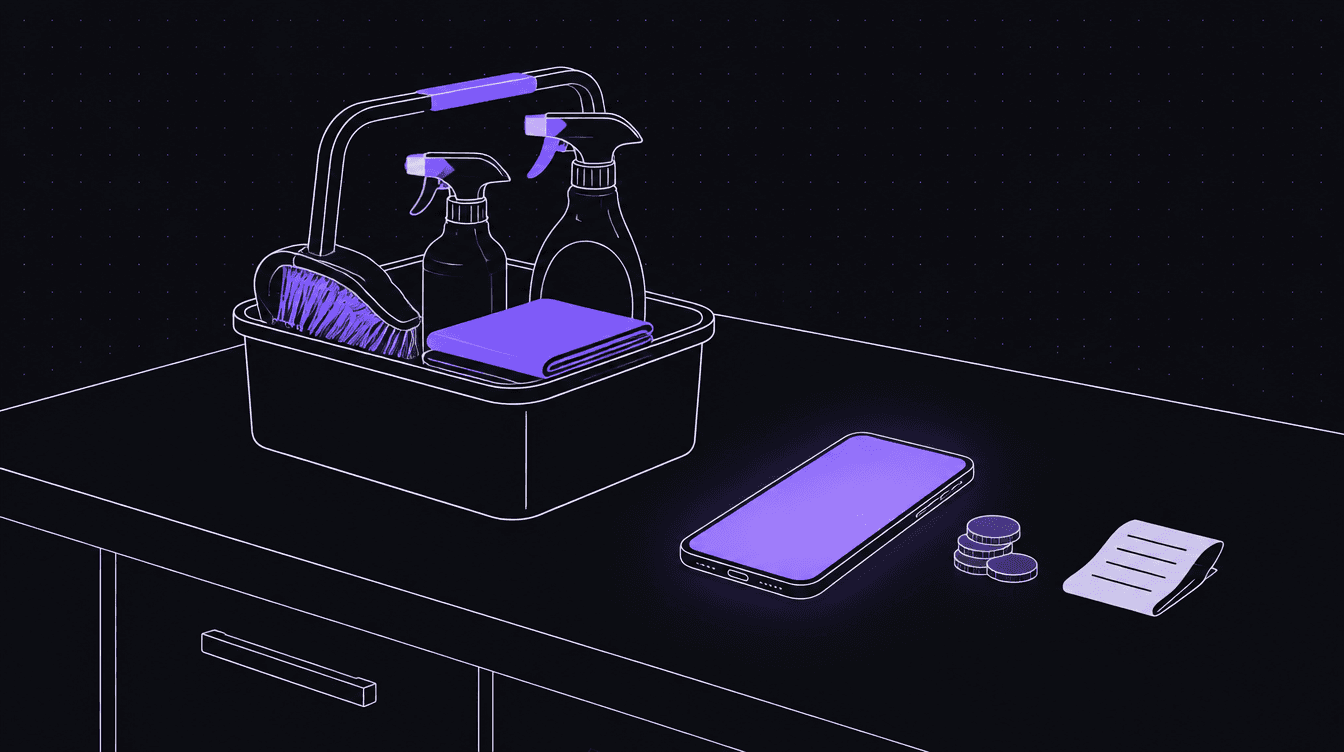
About $120 to $135 for a bare-minimum kit, itemized by Durable:
- Microfiber cloths, 24-pack, $15 to $20
- All-purpose cleaner, 2 gallons, $20 to $30
- Glass cleaner, $10
- Toilet bowl cleaner, $8
- Mop and bucket, $25
- Rubber gloves, 10 pairs, $12
- Heavy-duty trash bags, $15
- Scrub brushes and sponges, $15
Add about $80 for a basic upright vacuum if you don't own one. That's the whole list. You can upgrade any of it once cleans are paying for it.
For Airbnb turnovers, add a laundry bag or bin for linens and a phone that takes clear photos, since hosts expect before-and-after pictures. I couldn't find a sourced price for those, so the estimator lists them without one. The Airbnb start gets its own guide in how to start an Airbnb cleaning business.
Before you clean for strangers: insurance, bond, license (and the LLC question)
Liability insurance, about $504 to $725 a year. It pays if you break something in a client's home or someone gets hurt because of your work. Insureon puts the median for small cleaning businesses at $725 a year, or $60 a month, for $1M/$2M limits, and Simply Business reports a median of $504 a year among its customers. Paying monthly is what keeps your first-month cost low. Clients will ask whether you're insured before they hand you a key.
Janitorial bond, about $120 to $125 a year. A bond covers your client if someone working for you steals from them. No state requires one, and SuretyBonds lists $125 a year for $10,000 of coverage for a business with 5 or fewer people. Insureon's median is $120 a year. It's what lets you say “insured and bonded” on your flyers, and offices often ask for it.
LLC, $35 to $500 to file, depending on your state. This one can wait. It keeps your personal savings separate from the business if something goes wrong. Filing fees run from $35 in Montana to $500 in Massachusetts, and most states charge $50 to $200. Check the yearly fee too: California adds an $800 franchise tax every year. Many owners form the LLC once money is coming in, which is the order the estimator uses by default.
Local business license, varies. Many cities and counties want a general business license even for one person. Search “[your city] business license” or call city hall, then type the fee into the estimator. The section on licenses and the LLC question in the main guide goes through what to check.
The kit's startup budget sheet has the same lines, with space for your city's fees.
Later, once clients are paying
- Workers' compensation. Most states require it once you hire employees. Insureon's median for small cleaning businesses is $1,362 a year.
- A website that takes bookings. Useful once people search for you by name. A free Google Business Profile comes first, and I cover it in how to get clients for a cleaning business.
- Paid leads. Durable says to skip Thumbtack, Bark and Angi for your first 90 days, estimating $50 to $150 per lead with about 10 to 15% turning into clients.
- A car or a better vacuum. Spend your first client money here, before anything else on this list.
Starting with almost no money
A thread on r/sweatystartup asked exactly this: someone with a job, living paycheck to paycheck, wanted to start with $50 and no car. The owners who answered agreed on a few things.
Stay close to home. The top answer came from an owner who started with about $700 and called that “already pretty tight”. Their advice was to work Nextdoor, local Facebook groups and neighbors within a few miles, so you can walk or bike to every clean, and to grow only once you have a handful of recurring clients. Another commenter described a cleaner who posted in a local Facebook group naming her apartment complex, so her first clients were people she could walk to.
Use the client's supplies. Several people said many households already provide the chemicals. One person who hires cleaners wrote that every cleaner uses their supplies “but they always have their own mops and vacuums.” It pays less, so agree on a lower rate up front and buy your own kit from the first few cleans.
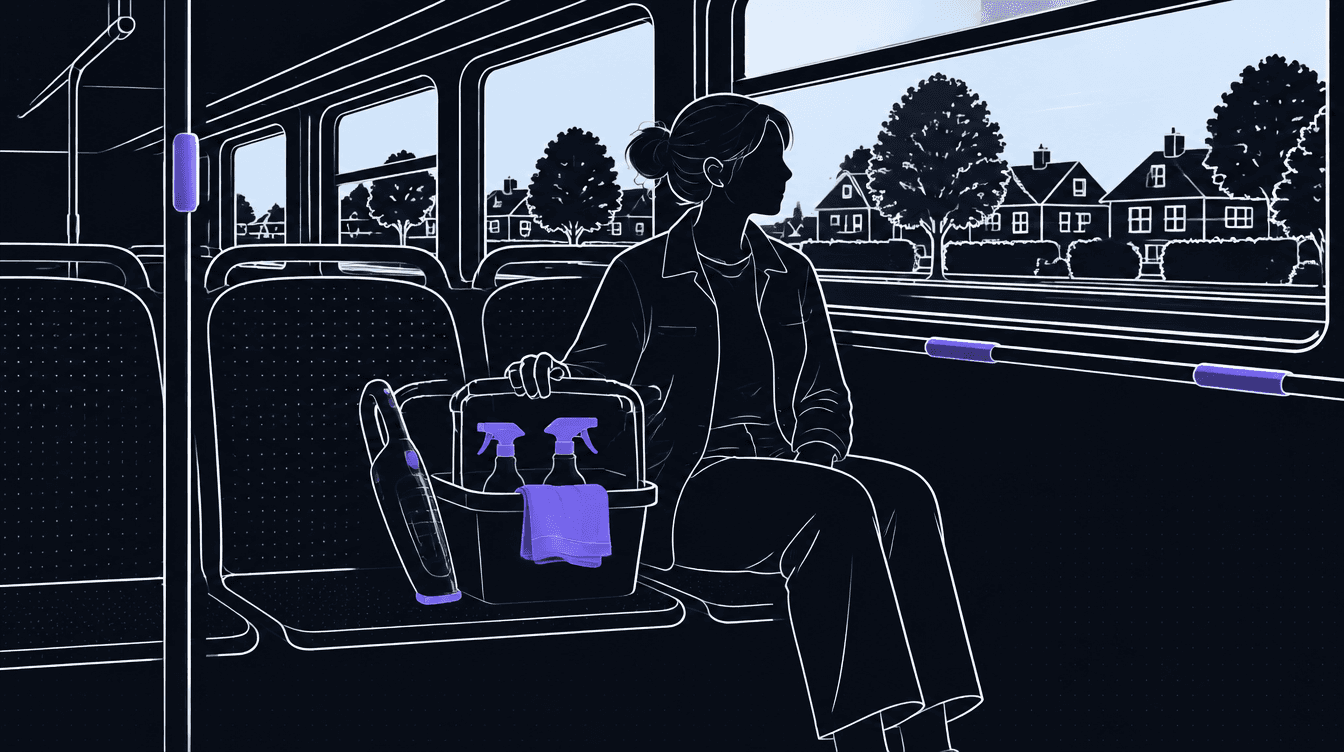
Take the bus. Two owners started that way: one left supplies at the offices they cleaned, the other asked clients to have a vacuum and later bought a handheld one.
One commenter pushed back: work and save first, because a business needs a cushion for the slow weeks. Both can be true. With the client's supplies, your real starting cost is insurance, and the estimator shows what that comes to.
The no-cost channels for finding those first clients are in how to get clients for a cleaning business.
Frequently asked questions
What's the cheapest way to start a cleaning business?
Clean homes on your own, near where you live, with a basic supply kit of about $120 to $135 and liability insurance paid monthly. Some cleaners start with the client's supplies to save even that, at a lower rate. Form the LLC once money is coming in.
Do I need an LLC before my first client?
No. An LLC protects your personal savings, and many owners form one once clients are paying. State filing fees run $35 to $500, and some states add a yearly fee, like California's $800 franchise tax. Check your city's business license rules before your first clean, since that one can't wait.
Do I need insurance before my first client?
Get it before you clean for anyone outside friends and family. General liability for a small cleaning business has a median of about $60 a month, and clients often ask about it before they let you in.
Is a bond required to start a cleaning business?
No state requires a janitorial bond. It costs about $120 to $125 a year, covers clients if someone working for you steals, and many offices ask for one.
How much should I charge for a 3-hour clean?
Cleaning businesses bill $30 to $80 per cleaner-hour nationally, so three hours comes to $90 to $240. Many cleaners quote by the home instead, which is easier for clients to compare. The guide to starting a cleaning business walks through setting your price.
How profitable is a cleaning business?
A solo cleaner keeps most of what they bill, since supplies are cheap. One standard clean of a three-bedroom home pays $130 to $200, so the first few cleans cover the startup costs above. Filling your week takes longer than covering costs.
Can I start a cleaning business without a car?
Yes, if you start close to home. Owners in a Reddit thread on this question took the bus, kept supplies at offices they cleaned, and asked clients to have their own vacuum. Look for your first clients within walking or biking distance.
Want the day-by-day version?
The cleaning business starter kit gives you a 30-day plan for homes or Airbnb turnovers, the message to send each day, and agreements, checklists and flyers filled in with your business name.
See the starter kitWritten by Dairon Canel with AI assistance for research and structure.