By Dairon Canel · Founder, Proven · Updated October 2026
Guide
How to start a cleaning business
You can start a cleaning business with supplies, a phone and a way for people to book you. Here's the order I'd do it in:
- Pick one start: cleaning homes, or turning over Airbnb rentals between guests.
- Work out what you'll charge from real local prices.
- Buy basic supplies and time yourself on a practice clean.
- Tell everyone you know, then reach strangers nearby.
- Get liability insurance and a bond before you clean for a stranger.
- Form an LLC once money is coming in.
You don't need a franchise or a cleaning background to do any of this. Most of this page is about step 4, because that's where people get stuck.
I turned the first month into a day-by-day plan with the message to send each day, in the cleaning business starter kit.
Homes or Airbnb turnovers: pick one to start
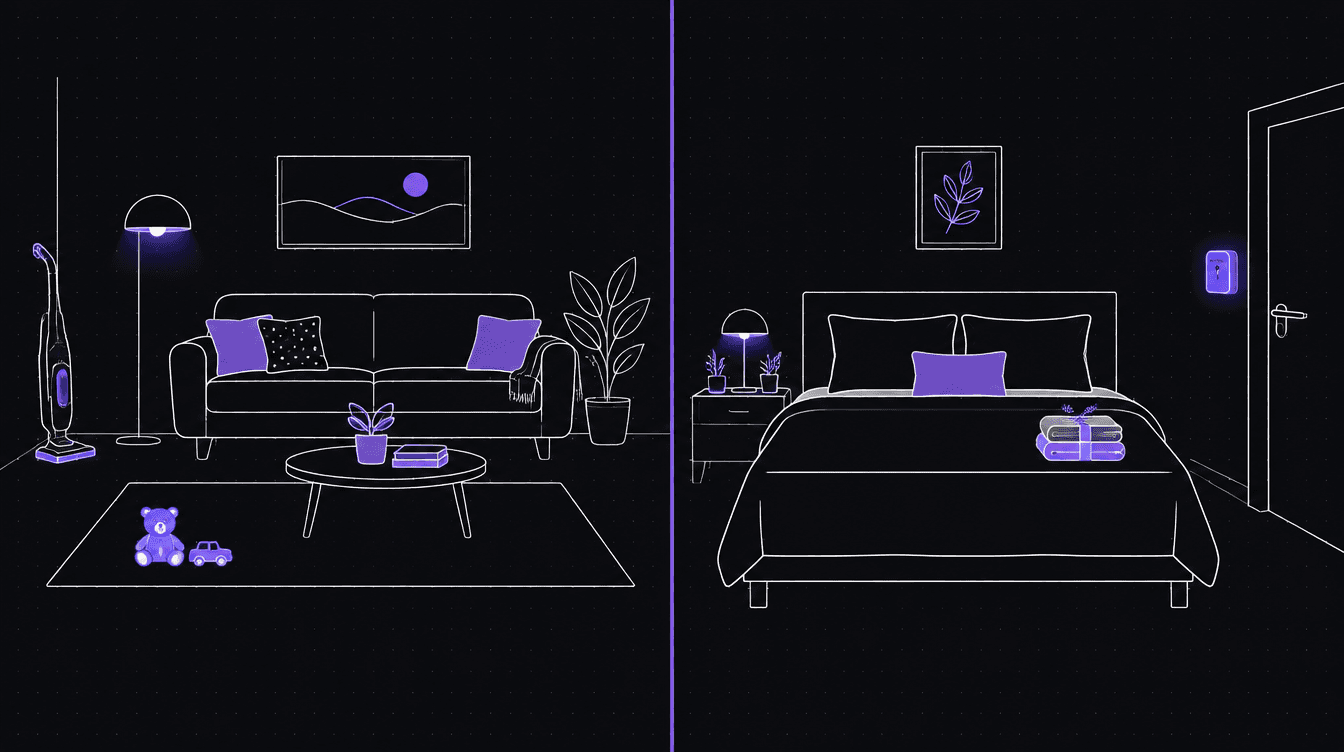
There are two easy starts, and they run on different schedules.
Homes. Standard, deep and move-out cleans for families nearby. A standard clean runs $140 to $220 a visit nationally, and the clients you want book every week, every two weeks or every month.
Airbnb turnovers. You reset a short-term rental between guests: linens, bathrooms, kitchen, restock, photos for the host. Turnovers pay $80 to $300 a clean for most listings (a studio can go as low as $65, a 5-bedroom past $350), and the work follows the host's booking calendar, so same-day availability matters.
If you're not sure, start with homes. It needs the least setup. Neel Parekh did that with MaidThis in Los Angeles, and within a few months Airbnb hosts started calling him for turnovers, so he switched. I cover the rental side in more detail in how to start an Airbnb cleaning business.
What it costs to start
Less than most guides say, if you start with what you need for the first month.
Startup costs
one person, homes or Airbnb
Before you clean for strangers
first month (median $725 a year)
not required by law, many clients ask
Later, once clients pay
by state, most $50–200
once you hire (median)
A standard clean of a 3-bedroom home pays $130–200.
Sources: supplies and vacuum from Durable, insurance, bond and workers' comp from Insureon, LLC fees from LegalZoom.
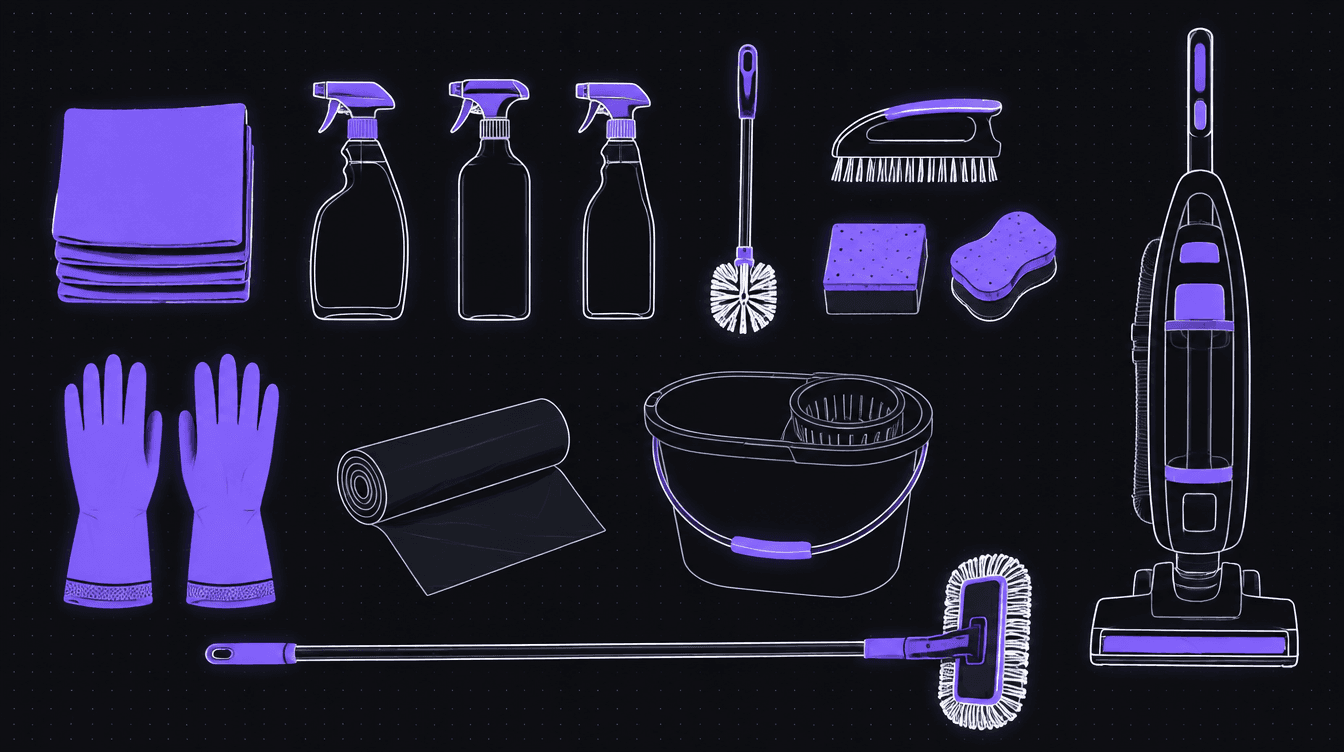
Supplies plus the first month of insurance comes to roughly $180 to $195. Neel Parekh says his all-in start at MaidThis was about $800, website included.
If money is tight, the order helps: your first clean pays for your supplies, and the LLC can wait until clients are paying. I break every line down, including starting with almost no money, in how much it costs to start a cleaning business, with an estimator for your own numbers.
Licenses, registration and the LLC question
Most of the paperwork is local. Your city or county may require a general business license, and the SBA's licenses page shows how to check what applies where you live. Three other things come up:
- A DBA (“doing business as”) if you work under a name other than your own. Smart Cleaning School puts it at $20 to $50.
- An EIN, the business tax number. It's free from the IRS, and you need one before you hire anyone.
- An LLC. If you start cleaning for money without registering anything, you're a sole proprietor by default, and the SBA describes that as a way to test a business idea. That's how I'd start: paying clients first, then the LLC once money is coming in.
The state-by-state details are in what licenses you need to start a cleaning business.
Insurance and bonding
Practice cleans for friends and family can come first. Get general liability before you clean for anyone you don't know. It covers you if you break something or someone gets hurt in a client's home, and it's the first thing a careful client asks about. The median for cleaning businesses is $725 a year for $1M/$2M limits.
A janitorial bond covers theft by you or your helpers. It's not legally required in any state, but plenty of clients ask for one, especially offices, and it runs about $120 to $125 a year. I'd get it at the same time as the insurance. Workers' comp comes later, once you hire.
What each policy covers and what it costs is in cleaning business insurance.
What to charge
Start from what people near you already pay. National ranges for a standard home clean and an Airbnb turnover, by size:
One visit, by size, national range
1 bedroom or studio
2 bedrooms
3 bedrooms
4 bedrooms
See the prices as a table
| Size | Standard home clean | Airbnb turnover |
|---|---|---|
| 1 bedroom or studio | $75 to $110 | $65 to $95 |
| 2 bedrooms | $100 to $150 | $95 to $145 |
| 3 bedrooms | $130 to $200 | $140 to $195 |
| 4 bedrooms | $150 to $210 | $185 to $240 |
Sources: home cleans are Angi's 2026 data as published by Housecall Pro; turnovers are from BNBCalc.
Two rules I'd follow from the start. Charge your deep-clean rate for the first visit, because the first clean always takes longer, and move to the recurring price from the second visit. Then keep recurring discounts small: 15 to 20% for weekly, 10 to 15% for every two weeks, 5 to 10% for monthly.
Time yourself on every clean for the first month. Smart Cleaning School suggests $100 to $125 a house as a beginner and getting to at least $30 an hour from there. The full method is in how much to charge for house cleaning.
Your first month, week by week
This is the part the other guides skip. They say “market your business” and stop. Here's what the first 30 days look like for each start, one job a day, in four weeks.
Homes
Airbnb turnovers
Day 1: set your prices
Day 3
Write your warm list
Day 4
Message the first 20
Day 6
Look legit online
Day 3
Map your market
Day 5
Turno profile
Day 7
Introduce yourself to the host groups
Day 11
Flyers
Day 13
Your first clean
Day 14
Ask for the review and the next booking
Day 8
Message the managers and co-hosts
Day 13
Your first turnover
Day 14
Review and the standing arrangement
Day 15
Realtors and property managers
Day 17
The neighbors of your clients
Day 20
Referrals
Day 15
Same-day availability
Day 18
Ask for host referrals
Day 21
Line up a backup
Day 24
Offer recurring to one-time clients
Day 27
Go back to the "maybe later" people
Day 29
Lock in next month
Day 22
Linens and restock offer
Day 24
Get next month's calendar
Day 29
Lock in next month
Day 30: plan the next 30 days
Homes
- Week 1: set up and tell people you know. Set your prices, buy supplies and time a practice clean, write a list of everyone you know nearby, message the first 20, then the next 20 and ask for referrals. Put up a free business profile so strangers can find you.
- Week 2: your first cleans. Follow up, answer every inquiry fast, book a test clean, put up flyers, get your insurance and bond in place, then do your first clean for someone you don't know and ask for the review and the next booking before you leave.
- Week 3: reach strangers nearby. Realtors and property managers, before-and-after photos of your work, the neighbors of the clients you already have, and a referral offer.
- Week 4: turn first clients into recurring ones. Offer every one-time client a recurring slot, call apartment offices about move-outs, go back to the people who said “maybe later”, and lock in next month.
Airbnb turnovers
- Week 1: set up and find the hosts. Set your prices, practice a turnover and time it, map the rentals and property managers in your area, set up your profile on Turno, where hosts post cleaning jobs, and introduce yourself in local host groups.
- Week 2: your first turnover. Message managers and co-hosts, bid on Turno jobs, get insured, set up a photo report for hosts, then do your first turnover and ask for a standing arrangement.
- Week 3: widen your reach. Offer same-day availability, follow up with managers, ask hosts for referrals, and line up a backup cleaner so a sick day doesn't cost you a checkout.
- Week 4: turn trial hosts into standing ones. Offer linens and restocking, get next month's calendar from every host, and lock in next month.
Two things to skip. Don't message hosts through Airbnb booking requests: Logan Robison tried it with Bonnie & A Broom and stopped because it annoyed hosts. And on Nextdoor, promote the business from a free Business Page, since a personal account can post an offer about once a month.
A good target for the month is five reviews in your first 30 days. Blake and Cleia Hickman started SA Cleaning Service in San Antonio with family and people they already knew, and grew mostly by word of mouth from there. They have 12 cleaners now.
Week 1 · Day 4
Message the first 20
Send script W1 to the first 20 people on your list, one at a time, by name. Send each one personally, never to a group chat.
Hi ___! Quick news: I've started a home cleaning business, Sample Co. Cleaning. I'm taking my first few clients in Eastside this month with $___ off the first clean. Would you want one, or do you know someone who'd like their place cleaned?
The kit has the day-by-day version of both tracks: the job for each day, the message to send, and the done check you tick off. The channels and scripts get their own guide in how to get clients for a cleaning business.
Do you need a business plan?
To clean houses, a one-page plan is enough. It answers five questions: who you clean for, what you charge, how many cleans a week cover your costs and pay you, where the first clients come from, and what you do in month two. A long plan matters when a bank or a partner asks for one. I walk through the one-page version in cleaning business plan.
Adding commercial cleaning later
Offices, churches, salons, small shops and gyms are a good second step once your week is full of homes. A 1,000 sq ft office cleaned four times a month runs about $100 to $200 a visit, so one small office can be worth $400 to $800 a month.

The bar is higher. Commercial clients usually ask for proof of insurance, a bond and a written contract with the tasks, exclusions and payment terms spelled out. Reviews help too: Amanda Stovall, who cleans homes in rural Missouri, was found on Google by a church with three buildings when she had about 33 to 35 five-star reviews. Her advice: do the walkthrough in person, bid a flat rate, and reply fast.
What cleaning business owners earn
These are the numbers owners have published about themselves. They're the stories that went well enough to share, so read them as what's possible, next to the price ranges above.
- Logan Robison's first job with Bonnie & A Broom paid $500, two days after his website went up. A year later the business was at about $100K in revenue.
- Mary Gonzalez says Mary and a Mop did $10K in its first month, working a post-construction niche in Orange County.
- Mudit Patel's Queen City Cleaners in Charlotte did $200K in its first 15 months.
If you clean alone, your hours set the ceiling. For a sense of the floor, house cleaners who work for someone else earn about $21 an hour on average (Indeed 2026), while cleaning businesses bill $30 to $80 per cleaner-hour. That gap is what you keep, before supplies and driving.
- About $21 an hour: the average house cleaner wage working for someone else (Indeed, 2026)
- $30 to $80 an hour: what cleaning businesses bill per cleaner-hour
Most new owners start with a few clients a week. The owners above grew fast, and their numbers come from their own interviews. They aren't a promise of what you'll earn.
Frequently asked questions
How do I start my own cleaning business from scratch?
Pick one start, homes or Airbnb turnovers. Set prices from what people near you already pay, buy about $120 to $135 of basic supplies (plus a vacuum if you don't own one), and time yourself on a practice clean. Then message everyone you know, ask for referrals, and get liability insurance and a bond before you clean for a stranger. Form an LLC once money is coming in.
Do I need cleaning experience?
No. You need to clean well and know how long it takes you. Do a practice clean at home or for a friend, time each room, and use that to price your first jobs. Smart Cleaning School suggests $100 to $125 a house as a beginner and working up to at least $30 an hour.
Is a cleaning business worth starting?
It's one of the cheapest businesses to start: supplies and the first month of insurance come to about $180 to $195, and your first clean can pay for both. The work is physical and your hours cap what you earn alone, so it's worth it if you're willing to clean for the first months and hire once your week is full.
Is $50 an hour good for house cleaning?
Yes. Cleaning businesses bill $30 to $80 per cleaner-hour nationally, so $50 is in the middle. If you clean alone, that's your rate before supplies and driving, well above the roughly $21 an hour house cleaners earn working for someone else.
How much do cleaners charge for a 2-hour clean?
At $30 to $80 per cleaner-hour, a 2-hour clean comes to $60 to $160. Many cleaners price by the home instead of the hour, for example $75 to $110 for a standard clean of a one-bedroom.
What do I need to start a house cleaning business?
Basic supplies (cloths, all-purpose and glass cleaner, a mop and bucket, gloves, brushes and a vacuum), general liability insurance, a way for people to reach you, and a list of people you know nearby. A business license depends on your city or county, and the LLC can wait until you have paying clients.
How long does it take to become profitable?
Often from the first few cleans. Supplies cost about $120 to $135, and one standard clean of a three-bedroom home pays $130 to $200. What takes longer is filling your week, which is what the first month of outreach is for.
Want the day-by-day version?
The cleaning business starter kit gives you a 30-day plan for homes or Airbnb turnovers, the message to send each day, and agreements, checklists and flyers filled in with your business name.
See the starter kitWritten by Dairon Canel with AI assistance for research and structure.